Dear Esther, and the Ur-Walking Sim.
Part 1 of X in a series on Walking Simulators.
April 30, 2020
Dear Esther began life as a 2008 mod for Half-Life 2. It was developed by thechineseroom, a development group based out of the University of Portsmouth and lead by Dan Pinchbeck, who was a professor working on his PhD at the time, studying narrative in virtual environments. On the ModDB site for thechineseroom, the platform by which the Dear Esther mod got distributed, Pinchbeck writes:
thechineseroom is the name of a development research project I run at the University of Portsmouth, UK. We’re interested in first person gaming - particularly, using mods to explore questions about gaming that you can’t answer by just analyzing commercial releases or theorizing about them.
In a clear statement of artistic intent, Pinchbeck and his collaborators positioned themselves in direct contrast to the prevailing, mainstream game design paradigm. By 2008, the first-person shooter had firmly established itself as the dominant form of interactive entertainment. Call of Duty 4: Modern Warfare released a year prior in 2007. Halo 3 completed the series’s trilogy in that same year. Game franchises that had not previously been first-person shooters transformed into them during this time. Fallout transitioned from a traditional isometric computer RPG to a first-person shooter in 2008, and Metroid went from a 2D platformer to an FPS in 2007. Meanwhile, Valve’s takeover of the PC gaming market was lead by its array of highly acclaimed FPSs, with Half-Life 2 in 2004, Team Fortress in 2007, and Left 4 Dead in 2008. The intention of thechineseroom development project was, essentially, to think critically about the tools of contemporary game development and consider what else could be done with them.
In the same year as Dear Esther, thechineseroom produced 2 other mods that roughly indicated the team’s trajectory. One of these was Antlion Soccer, a Half-Life 2 mod completed shortly after Dear Esther had its initial release. It consists of a small field for up to 8 players to compete in a soccer-like game in which they use the Gravity Gun from Half-Life 2 to toss spawning Antlion enemies into the other team’s goal. The experience is rather unlike the team’s other work, before or since, being a narrative-less multiplayer sport game, similar in style to Halo 3’s popular Grifball game variant which debuted the year prior. Still, the team’s inclination towards to reframing traditional shooter mechanics in a new and less violent way is visible here.
The other of these mods, released a few months before Dear Esther, was Conscientious Objector, a Doom 3 mod in which the player’s ability to kill enemies is removed. The player can “pacify” roving zombies with rubber bullets, but they quickly get up. A voice directs you via a communicator as you complete tasks, but their tone is hostile and they berate the player for their pacifism. The research team’s aversion to relying on traditional violence for gameplay is seen here in their first work, as is the team’s interest in using voiceover to provide context for the player’s experience.
Of these, Dear Esther caught on more than the others. The games was covered by ModDB’s curators and various gaming new sites of the time. It’s curious to see writers of the time struggle to cover to the mod. It was featured and praised in ModDB’s “Top 10 Spookiest Mods EVER!” video list, and seems woefully out of place. The gameplay of the slow-paced and somber Dear Esther is placed between footage of 9 other mods focused mostly on shooting monsters. Though the video praises the game’s ambience, it cautions viewers that there is no gunplay to found here. Similarly, Lewis Denby wrote on the game for Rock Paper Shotgun in 2009 in an effusively glowing article that, by its own admission, struggles to the describe the unique experience. Denby fixated on how the game is neither traditionally fun nor falls into familiar horror tropes, and marveled at how the mod seems to reject “pretty much every notion of what videogames should do.” Although vocabulary had not quite developed to describe what thechineseroom was doing, it was clear that Pinchbeck and his team had made something novel.
thechineseroom continued to return to the mod in the months following its initial release, polishing it and responding to feedback. On May 13th, 2009, thechineseroom announced that the game would be receiving a full overhaul with the aid of professional level designer Robert Briscoe, who had previously worked on Mirror’s Edge for EA. The project received initial funding via the Arts and Humanities Research Council of Britain, and additional investment from Indie Fund in 2011, as the second game funded by the program that would go on to fund indie darlings like Hollow Knight and Night in the Woods. The commercial release of Dear Esther arrived in February of 2012. A rerelease of the game came in 2017, largely identical to the 2012 release but remade in Unity, and with an additional Director’s Commentary mode.
The narrative experiment.
Dear Esther is a narrative experiment. In both the original mod and the remake, players explore an unnamed island located somewhere in the Hebrides, an archipelago off the west coast of Scotland. Beginning on a dilapidated dock, the player moves along the beach, over hills, through a cave network below the island, before finally ascending a tall cliff and reaching a radio antennae at the peak of the island. The movement speed is deliberately slow, simulating actual human walking speed, as opposed to the continuous sprint most videogame characters move at. Throughout the roughly 1-1.5 hour playtime needed to complete the game, the player walks about the island and hits unseen cues that begins voiceover narration. The narration takes the form of letters written to the eponymous Esther. Much of the time, any additional audio is ambient wind and ocean sounds, though frequently the original score for the game kicks in. Composed by Jessica Curry, wife of lead designer Dan Pinchbeck, the music does a lot to sell the melancholic and surreal mood the game is aiming for.
Though the minimalist gameplay is experimental in its own right, the game’s hook is that it employs randomization to offer a unique experience for every player. For each narrative cue, there are a handful of possible scripts that are read, 3 for each cue in the original mod, and 4 in the remake. The writing is vague, referencing characters and events without much, if any, establishment beforehand. Depending on which pieces of script you get in your playthrough, your interpretation of the events being described can vary. Your playthrough is your own, and any interpretation of the events you can have is highly subjective. Furthering this design goal of variation, the environment itself can vary randomly. Though I didn’t notice many significant differences in my playthroughs across both the mod and full release versions, supposedly small elements in the environment can be rearranged, like lines in the sands, or objects on tables. Though still subtle, the most notable of these are the “ghosts” that can appear about the island, semi-randomly placed black figures that can observed in the distance, but disappear if approached.
The ambiguity created by the vague narration and randomized elements is the point. In the first post on ModDB since the release of the mod, Pinchbeck writes about being interested in how players could put together the events of the plot differently:
…a few people have mailed through their interpretations of the story, which has been really interesting and brilliant to get. I’d love to get more of these, see how people have nailed it all together. It would really help us with the research ideas that sat behind the project. PM me your version of the plot - it’d be very appreciated (and I will eventually release my version). We may well use your contributions in a research paper, but I’ll contact you directly for a permission in that case. Any questions, drop me a line.
Pinchbeck recalls this in the Director’s Commentary as well, that he was excited in the aftermath of the release of the game to see what different players’ interpretation of the game’s plot and themes were.
Here’s what I gathered in my playthroughs. There are 4 named characters mentioned in the narration: Esther, Paul, Donnelly, and Jakobson. There is also the unnamed Narrator, who may be one of the named characters, specifically Paul, though he may be another character altogether.
Esther is the deceased wife of the Narrator, who died in a car crash. We get scant few details on Esther as she lived, but the Narrator is fixated on the events of her death. The Narrator has isolated himself on the Hebridean island on which you explore, writing letters to his dead wife and endlessly contemplating the forces that have driven him to this point of his life. Paul was the driver of one the cars involved in the crash. Perhaps Paul is the Narrator, referring to himself in third person, and he was driving Esther into a collision with an unnamed third party. Or perhaps Paul was the other car that Esther collided with. Regardless, the Narrator lingers on the question of if Paul had been drinking alcohol that night. In some pieces of narration, he says with certainty that Esther was killed by the car of a drunk, but in others, he claims that Paul was not drunk that day.
Donnelly is a writer who authored the book “A Hebridean History” that recounts the history of the island. He wrote on the islands inhabitants, miserable god-fearing shepherds mostly, as well as tales of an old hermit, and also Jakobson. Jakobson was one the first settlers of the island. He built a bothy, a small hut, on the island, hoping to acquire enough land and good-standing to marry. He died only 2 years after completing it, from one illness or another. In his dying hours, he attempted to scale the island’s cliff. His body froze, referred to as curling into a stone, before being found months later, almost perfectly preserved.
And that’s about all that I could mine in terms of hard facts about the plot, and even these are fluid. Depending on the pieces of narration the player can hear and their subjective interpretation of a the flowery prose, even these facts could change. For example, in the final piece of narration I got, Esther is referred to as Esther Donnelly, so perhaps those two characters are really one and the same. It may explain the Narrator’s crazed isolation on the island, if his late wife wrote extensively on its history. Yet Donnelly is generally referred to as ‘he’ and supposedly suffered, presumably until death, of syphilis. Some narration even seems to imply that he lived roughly contemporaneously with Jakobson, sometime in the 1700s. Perhaps Esther and Donnelly are simply related, or maybe the Narrator is drawing a more oblique connection between the two. What is to be believed? These are the questions Dear Esther is designed to tease you with as you journey about the island.
Regardless, the specifics of the plot are not particularly important. Beyond being ambiguous and even self-contradicting at points - again, depending on the narrations a player can roll on their playthrough - the narration is heavy on small details of memories, and light on plot specifics. The focus is less on encouraging the player to decipher a mystery, and more on encouraging them to mull over the themes being presented and make their own connections. The game is filled with multitudes of recurrent ideas, words, and imagery, a staggering amount for such a short game, and in aggregate these motifs form a complex web of connections.
Let’s take just one of these motifs as an example. In the history of the Hebrides as reported by Donnelly, island residents would carve long white chalk marks into the cliffs, indicating that people on the island are infected and that travelers should not come ashore. Such marks are visible in many places as the player wanders across the island. Within this one recurring motif, there is contained the idea of illness and infection, and isolation as a result of it. The stories of many characters in the plot center on illness and infection - Donnelly succumbed to syphilis, and Jakobson died to one miserable illness or another. The Narrator mentions he is succumbing to something as well, possibly an infection in his leg as the result of a great fall he took while living on the island, or perhaps related to the kidney stones he mentions suffering from. Relatedly, hermitage and isolation come up repeatedly. A legendary hermit once resided on the island and lived well over one hundred years. In the aftermath of the crash, Paul isolated himself from friends and family. And the Narrator has frequently returned to the island to live alone and contemplate the events of Esther’s death. This in turn leads to the themes of obsession and grief. The Narrator frequently equates his grief to an infection - “the infection is not simply of the flesh” - and the Narrator’s endless fixation on the events of Esther’s death is like an infection of his mind. All these story elements and themes are present within the motif of chalk lines drawn on the cliffs of the island, which in turn connect to many of the multitudes of other ideas present within the game.
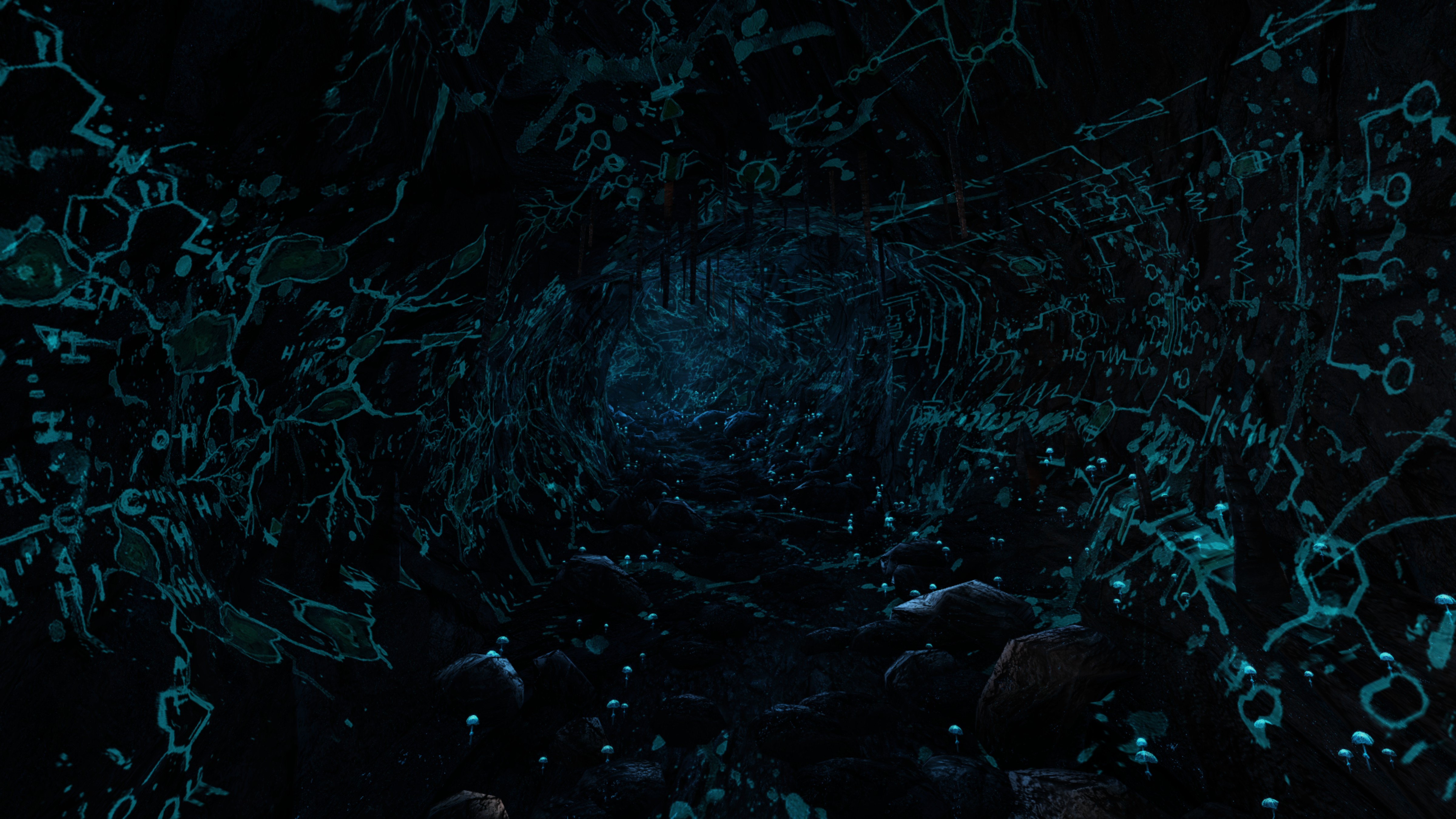
Trying to keep track of all the elements at play is an exercise in madness. Consider just the various paintings present throughout the island, particularly in the caves. There are paintings of molecular diagrams - perhaps relating to the Narrator’s fixation on alcohol being present in the crash, or perhaps Donnelly’s addiction to laudanum as a result of syphilis, or perhaps the Narrator’s memories of being on painkillers while being treated for kidney stones. There are paintings of sea creatures - the “chatter” and “singing” of the sea creatures is mentioned at several moments, perhaps connecting to the Narrator’s suicidal inclination to wander into the waters. There are paintings of neurons - perhaps relating to head trauma sustained in the crash, or the effects of alcohol on the nervous system, or simply to the Narrator’s obsession. And there are paintings of circuitry diagrams - which I cannot even hazard a guess as to its significance as no mention of anything related to circuitry appeared in any of my playthroughs! These various paintings, and many others, are depicted in a similar style and frequently appear near each other, sometimes clumped together to the point of overlapping and merging into new shapes. The game wants to overwhelm you and draw you into the manic mindset of the Narrator as he tries to make sense of the tragedy that has defined his life.
To try to develop a single cohesive interpretation of the plot would be a fruitless endeavor. All the themes in the narration and the motifs in the visual landscape of the island are not meant to convey a concrete reality. Again, there is no factual ordering of events to be found by deciphering the clues in the game. In the Director’s Commentary, Pinchbeck admits as much, saying his goal in writing the script was to create “dreamlike words” that evaded the literalness of traditional videogame storytelling. This mindset is evident in the origins of the title and opening words of the game. Pinchbeck heard the song “The Crab Song” by the band Faith No More and liked the sound of the opening vocals:
Oh, really?
Don’t come back
Stay out!
Dear Esther…
Okay, come back.
I didn’t mean it.
I said I was only kidding.
Come back
I didn’t mean it
Even the phrase “come back,” repeated at many points in the game, is sourced from this song. Inspired simply by how evocative the words were to Pinchbeck, the story spilled out from there.
Evolution from mod to game.
If there is an overall narrative to be deciphered from the game, it is not to be found in any realities that the narration can offer. By design, the shape of the narrative is loose and fluid, prone to contradictions. The words are there to contribute to an overall mood and place key themes in the mind of the player, primarily those of loss, grief, and self-destruction, among others. A narrative can then be found in the player’s path across the island, as structured by thechineseroom’s deliberate level design. This, I believe is the real innovation of Dear Esther. Most videogames, certainly those of the time the initial mod was release, treated the virtual environment as secondary, a pretty backdrop to serve as the play space for the action. Dear Esther elevates the virtual environment to the main focus of the game.
The transition of the game from a freely available mod to a full game 4 years later reflects this focus. Changes between the mod and the final game are mostly straightforward improvements. The music has been rerecorded with live players. Sound mixing is also substantially improved, so that music and narration and environmental sound no longer harshly clash as they could in the original. The script is largely unchanged between versions, though it is expanded upon and more narration options are possible within the randomized system. These are important improvements, but the work of revamping the mod is felt most strongly in the refinement of its mechanics and the enhanced environmental storytelling.
The original mod already had radically simplified gameplay mechanics and the remake takes this even further. The original mod carried over Half-Life 2’s movement system almost completely. You couldn’t sprint, but you could jump and duck. These movement capabilities limited thechineseroom’s ability to design a tightly paced experience. In my playthrough of the mod, I was jumping across the landscape and up hills, and ducking to try to squeeze under pieces of the environment. It was even required at points to progress. Even if it was clear which way the developer wanted me to go, I would jump around the environment, exploring the limits of the virtual space before moving on. In the remake, player-directed movement is restricted to just walking, which suitably discourages needless player exploration. Similarly, the health system of Half-Life 2 was carried over as well, although no health display is visible on the screen. This was used in the mod to enforce some of the game’s boundaries in a crude way. Walk beyond some invisible boundary, and the game will inflict damage upon the player until they die, forcing a restart of the level. The player can even take fall damage if the jump or slip off of high ledges, potentially dying and causing frustration. Even the physics system of the original game is in place, with every object able to be pushed around by the player, potentially causing some glitchy interactions. I found myself stuck on objects and pieces of the environment more than once in my playthrough. Naturally, these vestigial mechanics were removed in the remake.
These are obvious changes to make, but ones of critical importance. By refining the game’s mechanics, thechineseroom defined the type of game they were making. Damage and health systems are tools for combat, expressive movement mechanics like jumping and ducking are tools for freeform exploration of complex environments, and a physics system is a tool for creating puzzles and emergent gameplay. By stripping these mechanics out, the developers indicate their understanding that their game creates an engaging experience separate from these traditional gameplay features. thechineseroom discovered that the few things that remain, just audio and movement through virtual space, were all that is needed to invoke meaning.
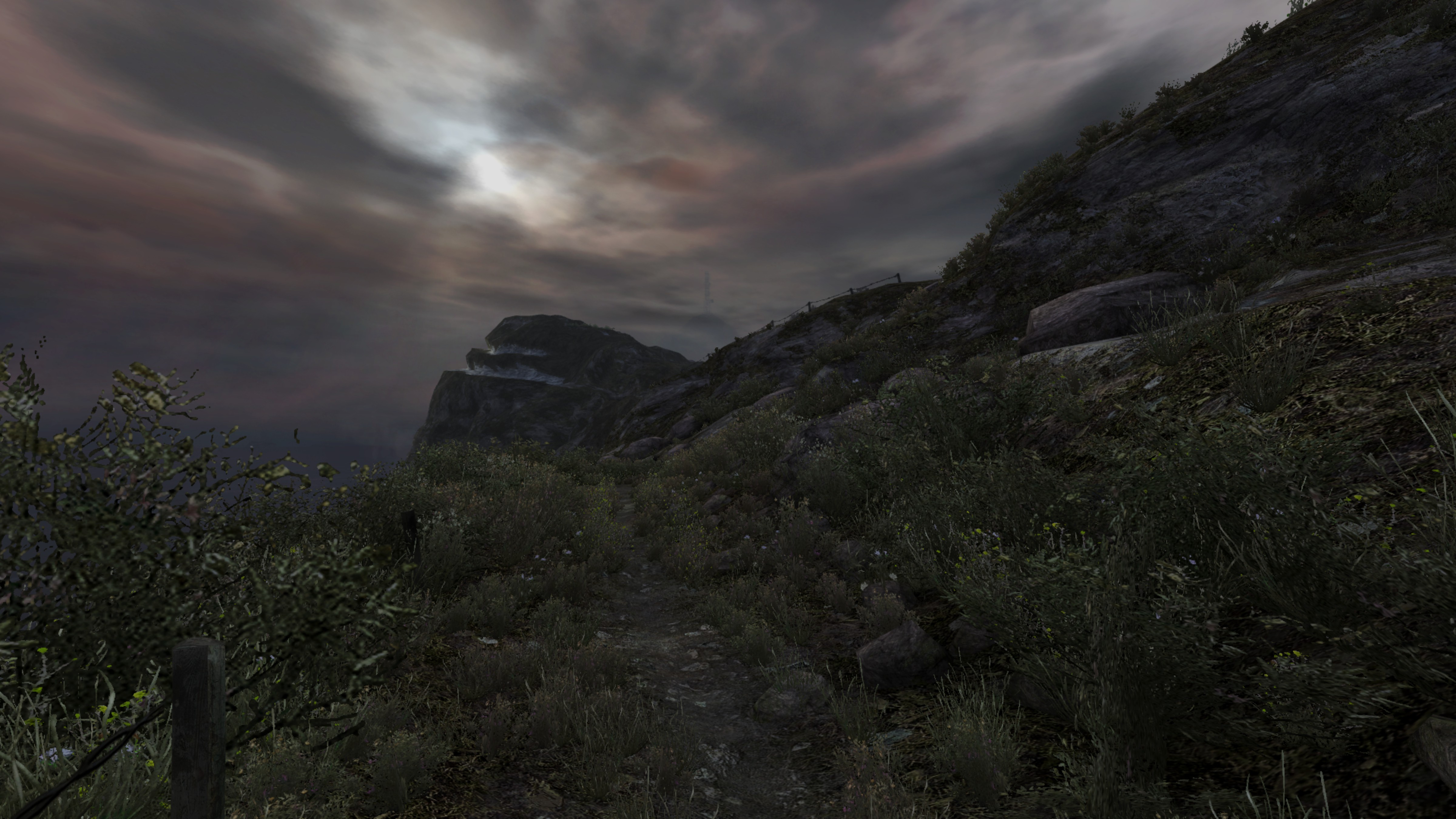
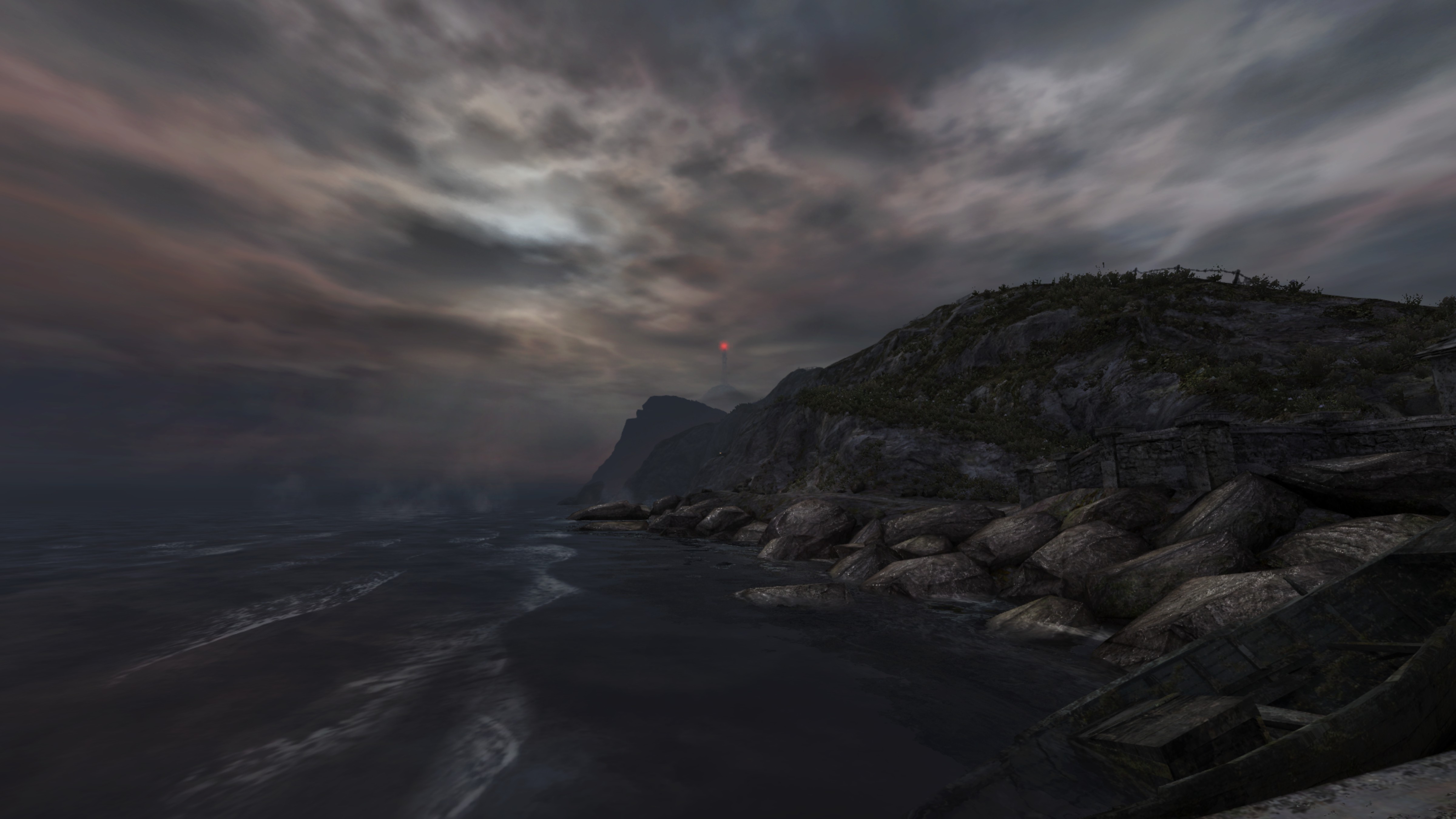
The simplified mechanics also allow a greater level of precision in environmental storytelling. This is evident in a trick the game pulls off, in that the levels of the remake are simultaneously more complex and more easy to navigate. The sharp and sterile geometry of the mod is swapped for naturalistic landscapes, yet it is never unclear where the player is able to walk. The ground is littered with all manner of plants and debris that sway in the wind, but the path forward is always evident. Exploration is no longer an exercise in trying to discern which way the developers want you to go, but rather a deliberate choice to wander off a well-defined main path. This is accomplished by effective signposting, a level design technique that subtly indicates where the player should be headed, through level geometry, light placement, and use of visual landmarks to orient the player. The technique is on display the moment the remake starts, with a radio antennae blinking red in the distance, indicating the player’s direction and drawing attention to the paths along the cliffside that the player should walk towards. In the mod, the antennae only made it’s first appearance by the second level, and at the start it is frequently easy to wander around the island into areas the developers did not intend the player to be. The mastery of signposting in Dear Esther’s level design enables thechineseroom to construct an narrative driven primarily by the player’s structured movement through the environment.
A narrative thesis.
The game progresses through 4 levels. In the first, The Lighthouse, the player begins on a dock of the island, as though recently arrived. In the distance, a glowing red beacon of a radio antennae beckons, indicating the player’s ultimate destination. This level has a linear path that the player must follow, up off the beach into the hills of the island, but the player’s movement is largely free and unconstrained. The game invites the player to step off the path at several points. One can stick to the well-defined and well-trodden path, or step off to wander through tall vegetation, or even meander over a gentle creek. It’s a small thing, but the freedom of movement, combined with the ambient noise of the waves and gentle music, invoke a feeling of calm, if a somewhat melancholic one. This level is also the most grounded of the four, though some elements, mostly off the linear path, hint at the unreality of your surroundings. If you explore the beach, you may find strange markings in the sand and a bent piece of a car’s suspension among the rocks, hinting at story revelations to come. Similarly, in the rooms of the titular lighthouse and in a small cave off the main path, the first few of the symbolic paintings can be found. In their small number, it seems plausible that someone could have painted them by hand. Indeed, buckets of paint can be found in the lighthouse. Here in the first level, the reality of the island seems mostly solid.
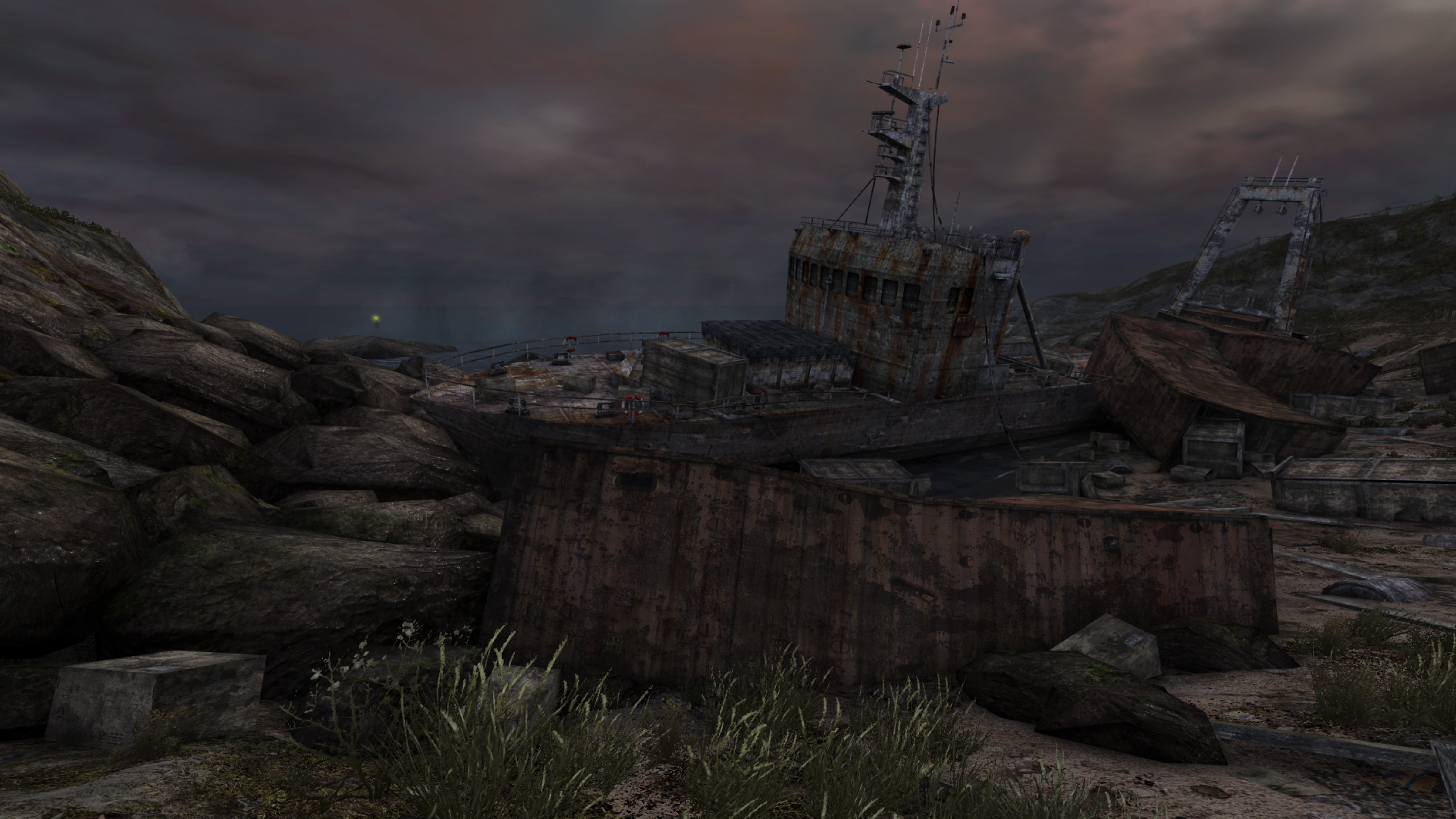
In the second level, The Buoy, the calmness begins to ebb away and reality begins to bend. It is indicated by the first vista you encounter, a sprawling wreckage of a tanker breached in a small bay, its cargo strewn upon the sand. The player is allowed to wander through the mess and observe the scene from either side of the bay. The somewhat serene journey through the hills of the first level have been replaced with an undirected wandering through a site of chaos and destruction. Whereas movement through the first level felt relaxed yet directed, the first segment of The Buoy is somewhat disorienting. It seems to fit, as around this point the clues in the narration will begin to click into place, and the player’s exploration of the shipwreck may seem to echo the Narrator’s past trauma. Reinforcing the lack of direction in this segment, the Lighthouse is not visible when you first view the wrecked ship. It is only revealed behind cliffs and hills once you approach the wreck and turn around almost fully to the way you came. The direction you need to go to proceed must be revealed after a bit of wandering.
After that, the path becomes increasingly restricted. Moving away from the wreck, the player must ascend a wide hill towards the bothy. The flat landscape, perhaps inviting at first sight, is actually littered with low barriers that impede the player’s progress and force a winding route upwards. The bothy itself, a lovely icon of domesticity when viewed from afar, is revealed to be a mess upon entering. Grime and trash and discarded books and papers are strewn about the main room, and the small side room houses a single dirty mattress and suitcase. The walls of the side garden are destroyed and another enigmatic painting stains the exterior wall as graffiti. The promise of domestic life, for Jakobson and the Narrator, lies in ruins.
Throughout this level, the hints of unreality of the environment gradually stack up. The strange paintings continue to be present, but there are also words painted on the shipwreck on the side facing out towards the water. Who would those words be for, and how could anyone have written them? Strange objects are also present where they have no right to be, notably used and bloodied medical equipment left behind in an abandoned stable. Most conspicuous of all though is a large, dark, and seemingly endless hole. It defies explanation.
From the bothy, the player is forced to reverse their upwards ascent and clamber down a narrow cliff path, down to a beach where they literally fall through a hole into the third level, The Caves. From here, all pretense of reality is discarded. The caves are resplendent in impossible visuals. Stalagmites and stalactites reach towards each other, alight in impossible blues, greens, and reds. The dark, wet stone glitters with millions of tiny specular highlights. Torrential water rushes through the space, all the while a heavenly voice sings a strange lament. There is almost no freedom of movement here, as the player is forced down tight, constricted paths, at times even being forced to duck to pass through the slim crevices. Beyond the alien visuals, the paintings increase in frequency to the point of madness. Down a stretch of cave, symbols and words coat every inch of the cramped chamber. This is the image of madness, obsessions spiraling into obsessions, revealing no order, simply chaos. The voice sings, “always, always… never.”
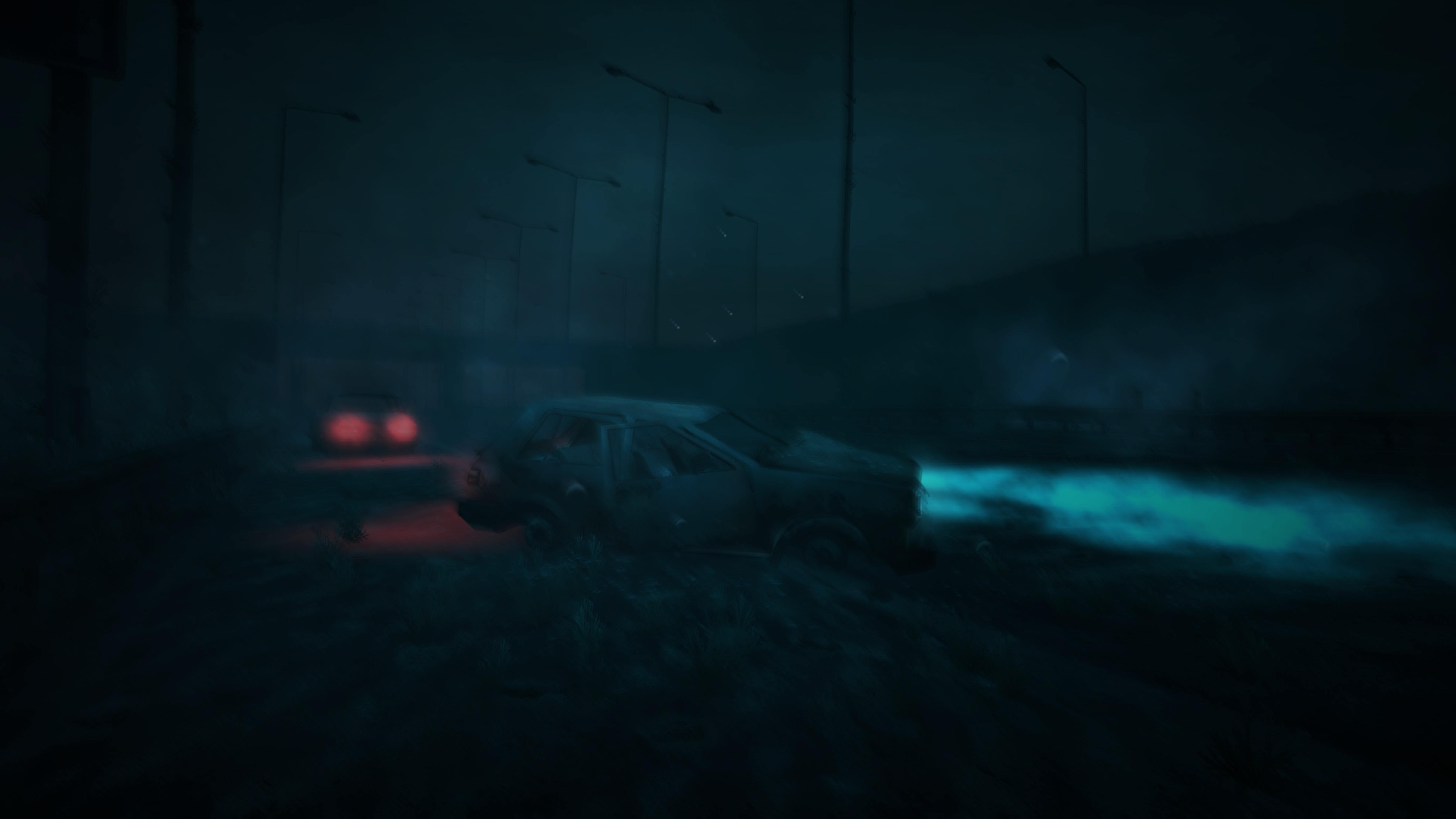
And then, from from the peak of spiraling madness, the player drops, literally, into the past. A long fall into water has the player awaken in an underwater dream world, a subaqueous recreation of the freeway on which the fateful crash must have taken place. The player will see two crashed cars, or on some rare playthroughs, just a single gurney. This dream place is the painful core at the heart of the Narrator’s madness, and the player reaches it as such, descending through winding, constricted passages of surreality before plunging into the depths.
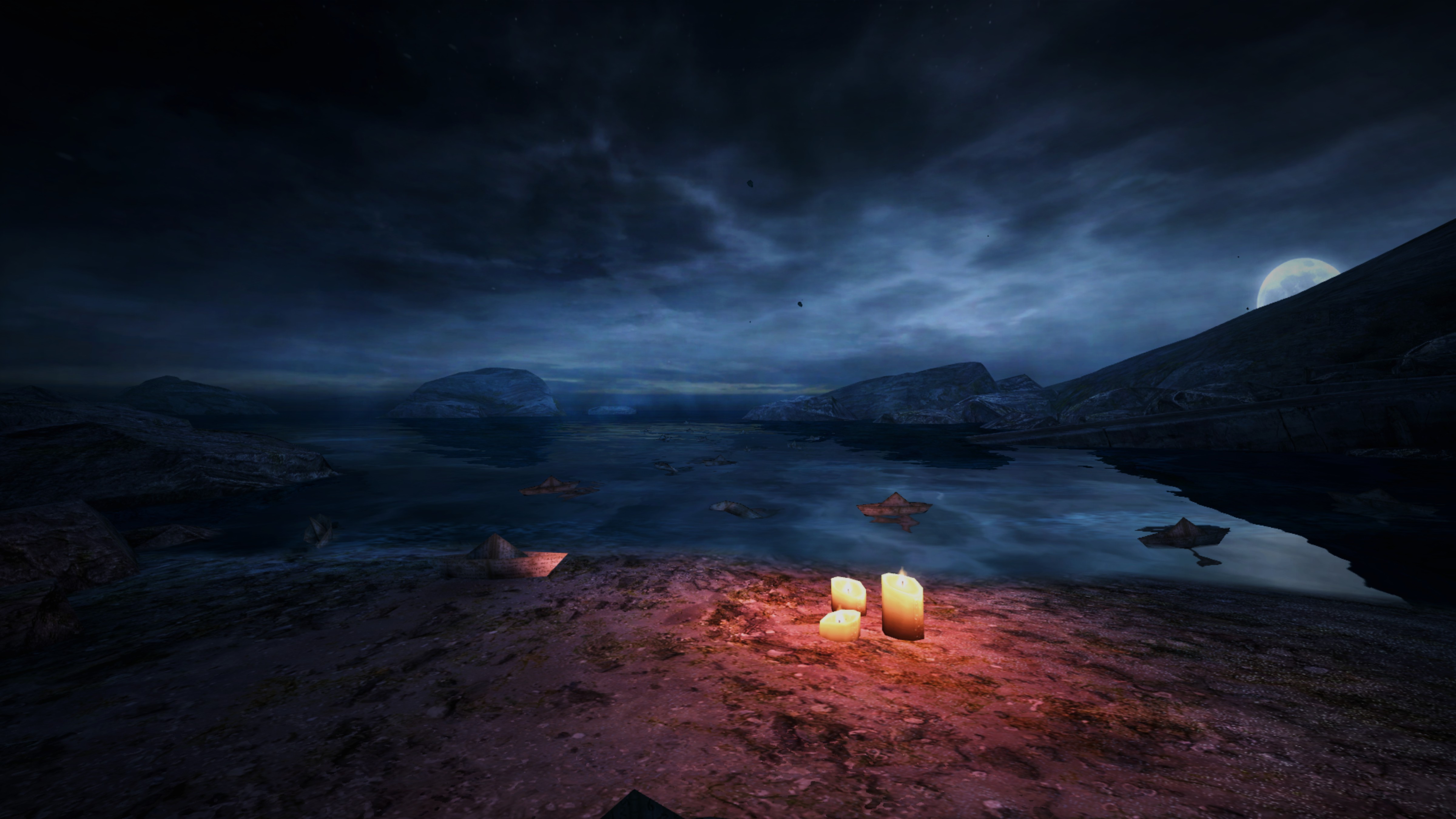
From there, the player is reborn. Emerging from water and ascending through yonic passageways towards a distant light, the player emerges into the final level, The Beacon. In this finale, the player walks out of the cave, along a beach, and finally climbs up to the antennae that has beckoned them since the outset of the journey. Though the level is a somewhat return to normality after The Caves, the pretense of reality is firmly shattered. The beach is littered with countless candles, guiding the player’s passage, and lighting small coves where significant objects can be found - a heartbeat monitor, photos of the accident, a nest of eggs. They look like memorials to a life that never was. Before the final ascent begins, a fleet of paper boats float on the beach’s water, addressed in some narration as the very letters the Narrator has read throughout the game. Never sent, as Esther cannot receive them, they are being let go of. Having conquered the madness of the caves and now releasing the letters to the dead woman, the final ascent is framed as an act of absolution. Reinforcing this, if you look back at the summit from location where the paper boats are floating, the cliff is shaped like the body of a woman.
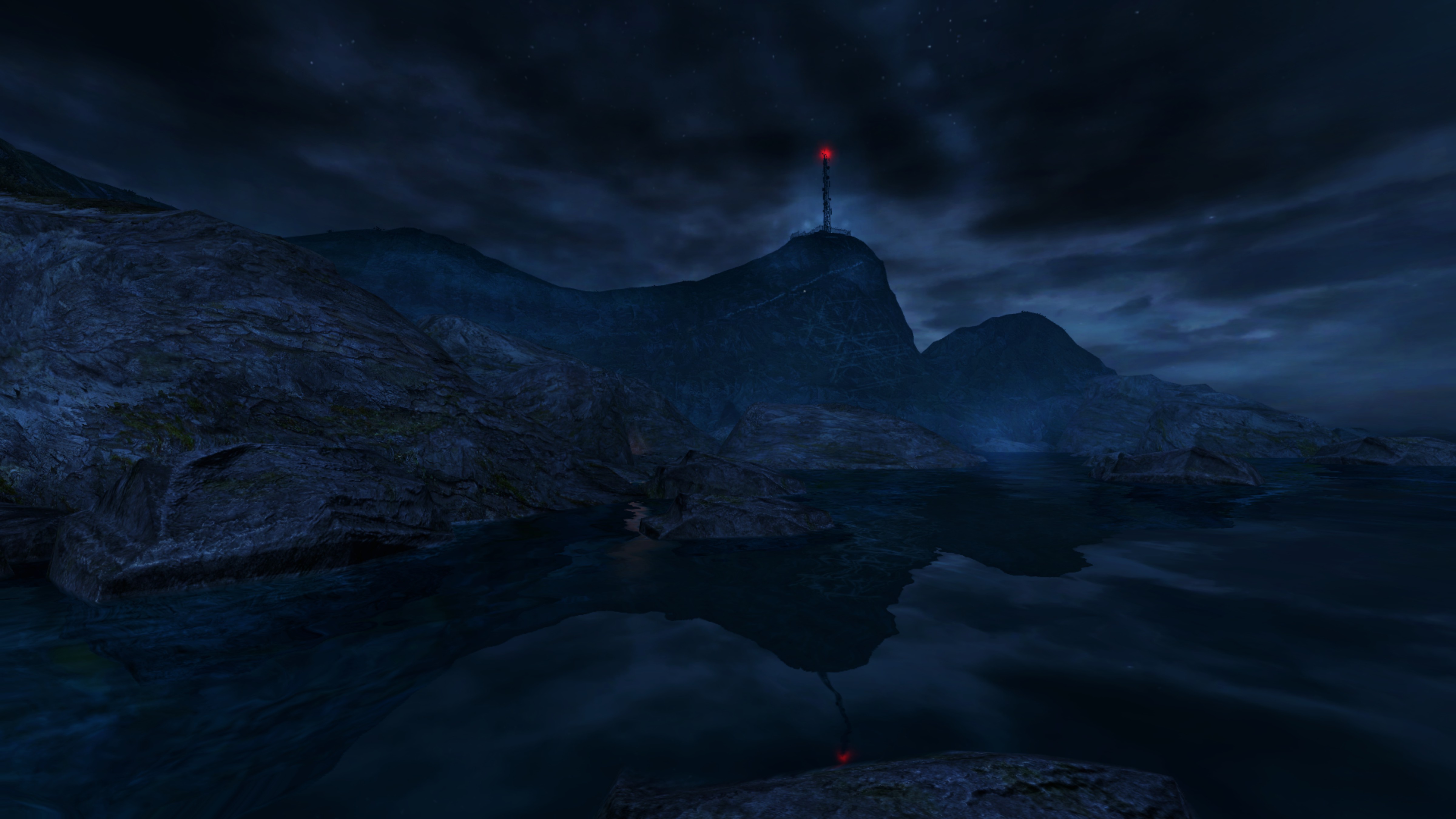
The path to the top set the emotional intensity appropriately. The wind whips with rising ferocity, the Narrator’s voice gets progressively strained, and the music is suitably foreboding. On a ledge in an abandoned station overlooking the cliff, a single ring, or sometimes two, can be found left behind. Upon reaching the top, a final piece of narration begins as a first person cutscene plays out, showing the player ascending the antennae’s ladder before throwing themselves off. Before hitting the ground, the camera pulls up out of the fatal dive. A shadow of a bird can be seen; the player has been transformed. Instead of hitting the ground, the view swoops up and flies over the candle-lit beach, towards the fleet of paper boats, and then past them and across the water, away from the island. The act of self-destruction transforms into an act of escape, one that frees the player of the island at last, and all the guilt and grief associated with it.
Successes and failures.
I believe this is the game’s ultimate success - not the randomization of storytelling elements, but the construction of an impressionistic narrative driven primarily by the player’s movement through virtual space. The randomized narration works best when it acts in support of this.
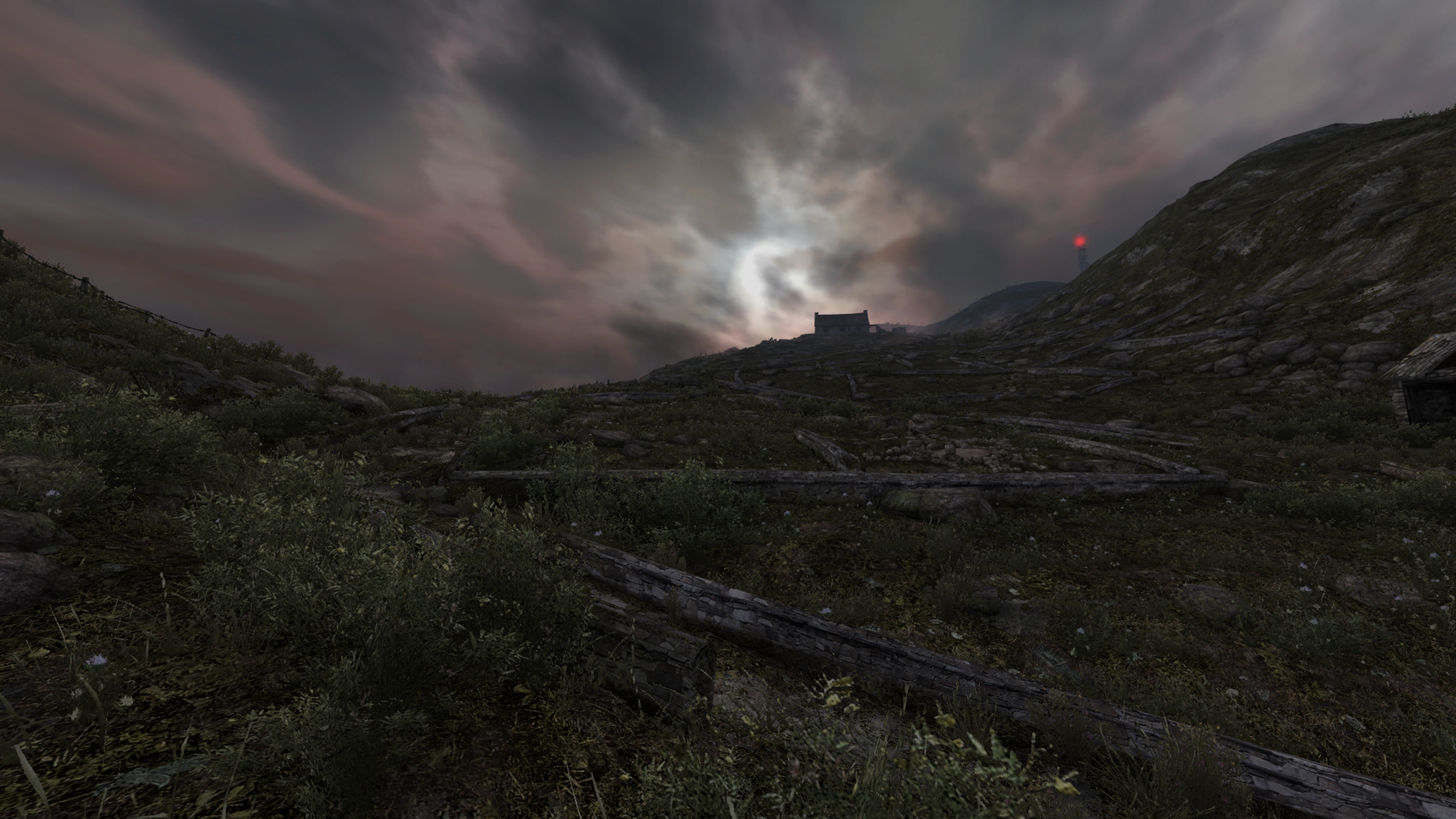
The game hits its peaks when these two factors defining the experience - the level design that structures the player’s movement and vision, and Pinchbeck’s writing as wonderfully narrated by Nigel Carrington - align and coalesce into a brief yet strongly emotional moment. The walk towards the bothy in the second level is on of the best displays of this in action. The level design positions the bothy at the top of a hill, framed against a vivid sky, a perfect image of a quaint domicile. The narration here discusses Jakobson, the man who built the bothy in hopes of marrying, before revealing the failure of his efforts. Indeed, upon reaching the bothy, the ruined state of it underscores the losses of both Jakobson’s and the Narrator’s dreams of marriage. And Curry’s sublime score seems to the emphasis the emotion too, as determined piano chords give way to a strained violin. When the factors of the game work in alignment, when the music hits just right as you admire an impressive vista, and an impassioned bit of narration begins, the game creates curiously appealing moments of melancholy. When strung together, these moments define the impressionistic arc described before.
At its best, the narration reinforces the impressionistic understanding of the island’s geography by reflecting on how spaces can hold meaning. Consider how, early in the game, a piece of narration may reflect on how the religious shepherds of the island lost their one bible, and the Narrator muses about how they might have assigned biblical passages to the locations on the island, “marking the geography with a superimposed significance - that they could actually walk the bible and inhabit its contradictions.” Or, consider the many points where the Narrator equates his body with the landscape - how his kidney stones may have grown into this island, or how the caves the player traverses are his guts. The Narrator considers how physical places can be so intimately tied with a person’s life that they become synonymous, and implicitly invites the player to do the same. If this island is a body, what are the chalk lines, carved so deeply into its flesh? If this island is a memory, what is that endless dark hole near the shipwreck hiding?
It can be frustrating when the narration seems out of sync with the rest of the game. The randomization seems to hurt the experience in this regard, as it seems to work only when tightly constrained. At best, the game makes repeated playthroughs more engaging by offering small variations. For example, shortly after leaving the bothy, the player will hear one of several stories concerning Jakobson’s death, all with some commonalities. It is a pleasant, though not revelatory, experience to hear a different version of some events. At worst, the randomization serves as a distraction, creating loose ends and failing to properly introduce ideas. Early in the first level, I learned about the circumstances of Esther’s birth, in which she had a great red birthmark on her face, which faded over time, but silenced the delivery room. I anticipated some sort of follow up on this detail, yet got none. Perhaps there is no follow up, or perhaps my particular playthroughs were not lucky enough to get it. Or, consider the circuit diagrams again, which I did not hear any mention of in my playthroughs. I suspect the intention is to create an enticing sense of depth and mystery, that the entirety of the story and the island cannot by fully understood. Also, to encourage discussion - Pinchbeck was keen to get players’ takes on the story in the days following the mod’s first release.
In practice, I find these narrative gaps unfulfilling more than anything else, and highlight the limitations of this form of randomized storytelling. Besides, even in a single playthrough the game is already enticingly ambiguous, so I don’t feel it needs to rely on randomization to foster discussion about its meaning. The overall narrative crafted by the level design carries the experience where the narration falls short, but ideally the randomization could be smart enough to ensure some measure of completeness, by mentioning all relevant themes and following up on any threads it establishes. Otherwise, I feel the game would be better served by an unchanging but well-crafted script. As it stands, the randomization neither allows for dramatically different narratives for the player to put together - any two playthroughs will be much more alike than they are different - nor does it satisfy a desire for a complete feeling narrative. It falls into a frustrating, awkward middle ground.
Aside from issues with the randomization, my only other issue is that the game is at points too heavy-handed. That is not in regards to the overwrought emotion of the game; I thoroughly enjoy that. The flowery writing, filled with poetic similes and metaphors, recalls old Romantic literature, particularly when paired with the dour landscape of the British Isles. I can easily imagine this not working for some players, but I think it finds its mark.
Despite the intentionally elevated emotional amplitude of the game, it thrives on its ambiguity. As described before, the multitude of visual and thematic motifs make for an experience dense with meaning, and grappling with the many interpretations of what is being presented leads to much of the enjoyment. Less effective are the points when what is presented to the player lacks much, if any, nuance. The numerous bible quotes, referencing Paul’s Conversion for Acts 9 in the bible, littered about the island stick out to me as some of the least effective visual storytelling. If they were used in moderation, I suspect I would be more sympathetic - in isolation, the quote of “neither did he eat nor drink” on the shipwreck works well as a visual surprise. But the frequency of the quotes ramps up through The Caves, and during the final ascent in The Beacon, the quotes are plastered all over the environment. To start, the quotes lack the enticing ambiguity of other aspects in the game. The quoted passages tell of a traumatic religious experience that befall Paul while traveling, resulting in him being forcibly isolated for a period of time, before being converted to the path of Jesus. The biblical event maps directly to the plot of the game, names and all, in a way that allows for little interpretation. Furthermore, the omnipresence of these quotes in the final level, plastered as they are along the cliff, detract from the climax of the game - craning the camera to try to read what the quotes say simply distracts from the emotion of the final ascent. The writing feels like an unnecessary leftover from the mod, though it made more sense in that context. At the end of the mod, the player flies away from island while looking back at the cliff, showing the full quoted passage. Since the camera looks out to the water in the remake, the bible quotes do not get a similar moment of clarification.
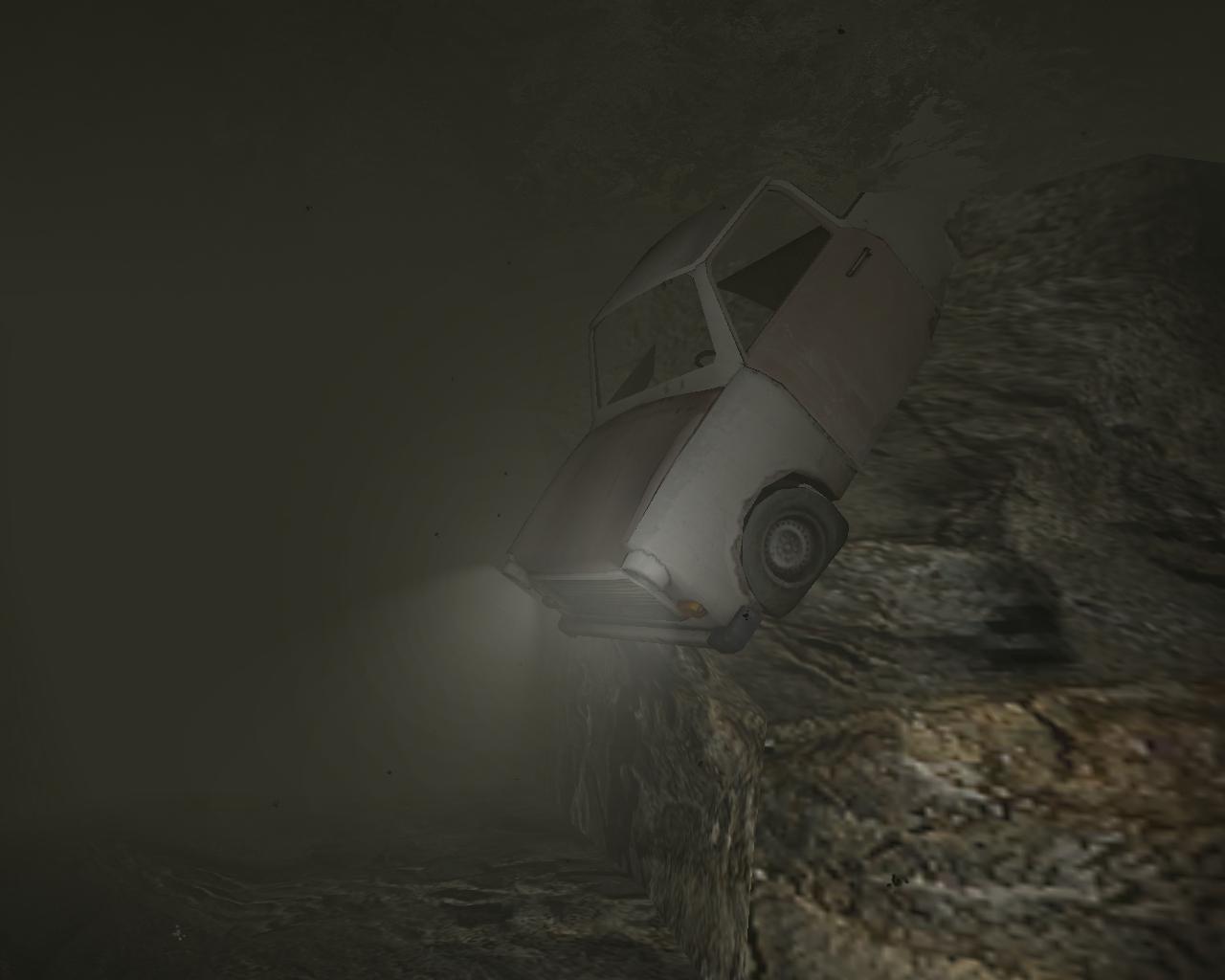
Less egregious, but still notable, is the underwater hallucination in The Caves. It works fine as intended, as a return to the dark memory that begin everything, while also marking the beginning of rebirth in the player’s journey. It’s clunky though - the fade to black in and out of this scene cuts into the continuity of the journey, and I don’t understand the need to visit the site of the accident. The writing and subtle visual hints do enough in evoking the power of that traumatic event, and actually showing it feels a step too far. It’s a rare instance of the original mod doing it better. There is no hallucination sequence in the original, but the equivalent moment has the player fall into a pool of water filled with pieces of crashed cars embedded in the rocks. It accomplishes a similar goal in a smoother way, and I would have preferred to see this initial idea expanded upon.
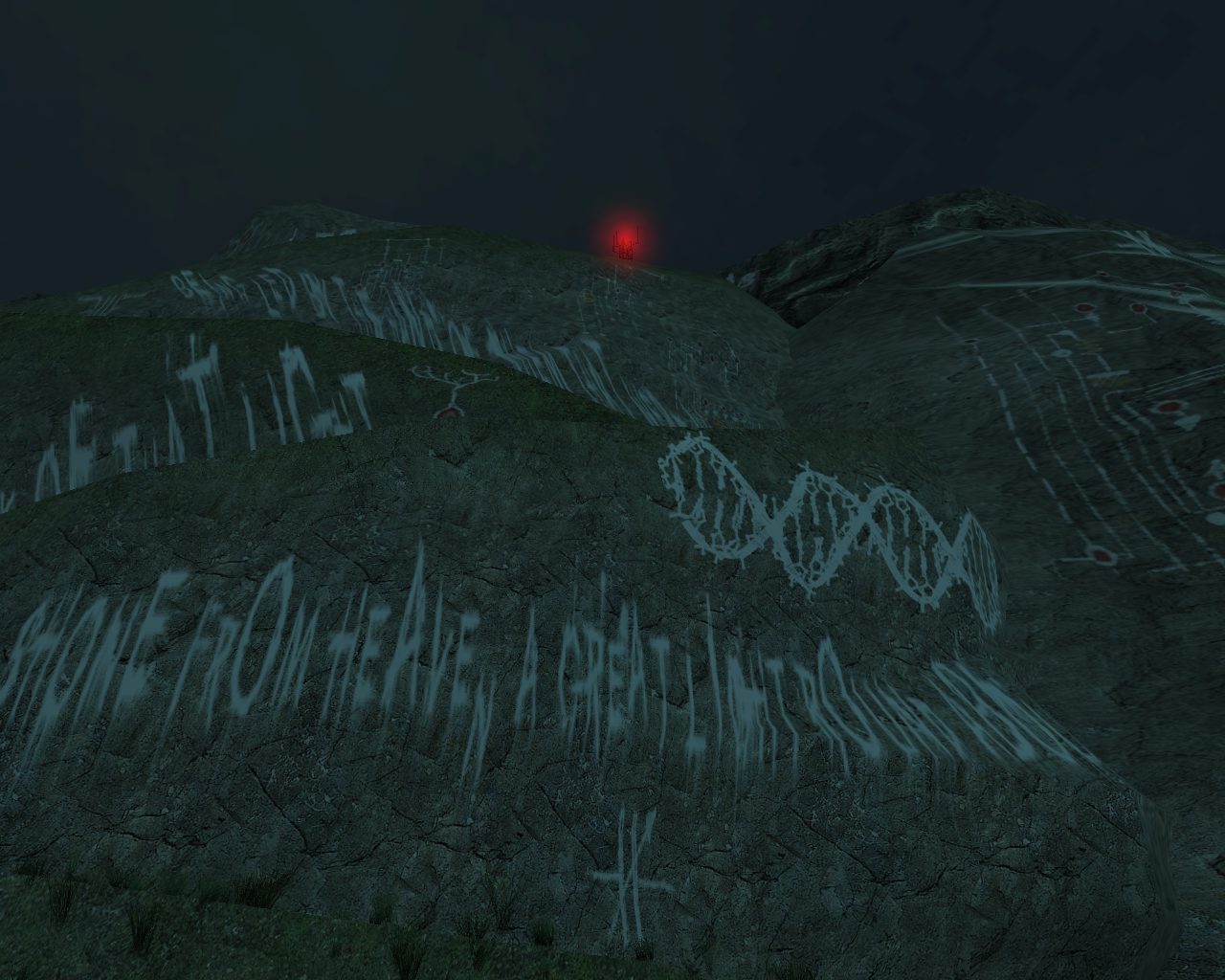
And finally, the ending is somewhat unsatisfactory. As the player reaches the fence gate leading to the antennae, control is rather suddenly ripped from the player and game transitions to a cutscene that shows, in brief moments separated by fades to black, the player climbing the antennae before jumping. Like the hallucination, it is not terrible, but it is an awkward way to handle a critical moment that seems to indicate a lack of trust that the developers have in the player. The game has clearly been building to this final climb since the beginning, yet the developers don’t allow the player to participate. Even if the developers did not want to bother with programming ladder climbing, a concern expressed in the Developer’s Commentary, I feel that allowing the player to approach the antennae and showing the full climb would have maintained continuity and felt smoother.
To conclude.
I think of Dear Esther as not only the first walking sim, but also the ur-walking sim. It put the emerging genre on the map twice, as both the initial mod and the full release drew a lot of players and media attention that responded to how different the game felt from its contemporaries. thechineseroom developers reflected on their role as the inception of the genre in the Director’s Commentary; they knew what they were doing was experimental, but perhaps did not realize how revolutionary it would seem to others.
Not much in Dear Esther is wholly new. Other games had narration that reflected the player’s actions, notably Portal in 2007. Many games had pioneered signposting techniques for level design before. And though Dear Esther is slower, more minimal, and more melancholic, other games had explored quietude and emotional narratives before as well. Indeed, in the Director’s Commentary, Pinchbeck namechecks many mainstream games as inspirations - DOOM, Halo, System Shock, STALKER. He notes that, though the game eschews any sort of traditional gameplay, Dear Esther does have something akin to a gameplay loop. The narration creates bursts of engagement, punctuated by stretches of quietude, somewhat akin to the cycle of tension and release that is a staple of good game design that can be traced to early arcade classics like Pac-Man. Nothing is wholly new in Dear Esther.
But that is precisely what makes Dear Esther quietly revolutionary, and why it deserves to be thought of as a landmark title in the development of walking sims. It promoted preexisting ideas in videogame development from background elements to the forefront of the experience. Dear Esther claimed that games can be engaging even without traditionally fun gameplay mechanics. It claimed that a game can tell an unusual narrative and players will be receptive to it. It claimed that virtual environments can be more than backdrops for play.
And the litany of games that followed in Dear Esther’s footsteps proves these claims correct.
Further reading.
The Crab Song, by Faith No More.
The original inspiration for the story of Dear Esther. Definitely give it a listen, it is not at all what I expected.
ModDB is still active, though it feels from a different era. Trawling through old internet forums is a blast, and helped with my research.
Dear Esther really sticks out like a sore thumb in this video.
Touched by the Hand of Mod: Dear Esther, by Lewis Denby.
A great, energetic piece of writing on Dear Esther in the style of New Games Journalism. Very personal and impassioned. Worth a read.
Dear Esther: An open letter for story telling in games.
An interview with thechineseroom around the time of Dear Esther’s 2012 release. A helpful piece of writing that also reflects on the state of “esoteric gaming” at the time.
The Art of Dear Esther: Building an Environment to tell a Story.
A 2013 GDC talk by Robert Briscoe, lead environmental artist for Dear Esther. A quick watch, a cool look into his process..
Bandcamp page for Dear Esther’s soundtrack.
I don’t feel I wrote enough about the importance of Jessica Curry’s soundtrack in this game. I have no idea how music works, so it’s difficult to write about more deeply than ‘I like it.’ That’s something to work on. In any case, give the soundtrack a listen. It’s really grown on me as I’ve listened to it over the course of writing this piece.
Jessica Curry’s podcast, The Sound of Games, on BBC Radio.
I adore this podcast, it’s been a gift during quarantine. Great music, paired with very polite British conversation about the process of artistic creation. The older episodes have shortened clips of music for rights reasons, so make sure you catch the new episodes within a month of release to hear the full hour.
Journey and Dear Esther Comparison, by Matthewmatosis.
I really enjoy Matthewmatosis’s writing, but he was not kind to Dear Esther in this video. This series was inspired by a desire to respond to some of what he says in this video. Worth a look for an alternative viewpoint.
Errant Signal - That’s No Game…
Errant Signal is a major influence on how I understand games. I remember this video being one of the first of his that I watched. The video is not really about Dear Esther, but about the conversation Dear Esther and its contemporaries started regarding what defines a game.
Innuendo Studios is fantastic, another big influence on how I think about games. His analysis takes a very different direction than mine did.
p.s.
Thank you for reading. I really agonized over this piece, and I’m still not fully happy with it. There were a lot of ideas that I cut, and many others I wanted to explore more but didn’t have the words. I still think I tried to do too much with this piece. Is it a review? Is it a postmortem that considers the game’s development history and impact? Is it a critical analysis of its themes? I’m not really sure anymore. It works ok, but my intention is for future installments in this series to be more focused. And, like, half as long. I’m excited to work on them, so stay tuned!